



The question always seems to come on a Tuesday, from the person you least want to disappoint. A denominational visitor, or a parent, or your own pastor, asking a plain thing: has everyone who works with the children actually finished the safety material? You suspect the answer is yes. You also know you cannot prove it. The training happened one conversation at a time. A new greeter got the binder. A new children's worker got a PDF that had been forwarded so many times it still carried three other people's replies stapled to the top. Somebody got fifteen minutes in the hallway before second service and a promise that you would circle back. So the honest answer to a fair question is a shrug, and shrugs do not feel good in front of a parent.
You were never short on material. You have too much of it, scattered across an email account, a shared drive, and the memory of whoever taught it last. The thing you never had was a single place where the course lives and a way to see who has walked through it.
That is what Learning is for. You open it and start a course, once, for the training you keep teaching anyway: the membership class, worker training, pastoral training, the leadership track you rebuild from scratch every spring. Inside the course you build lessons, and each lesson holds the real thing. Written content for the parts you would normally say out loud. Files for the forms. Links out to the videos and outside resources you have been pasting into chats for years. While you build, the course stays a quiet private draft, so you can move a lesson, rewrite a clumsy paragraph, and second-guess yourself in peace. When the whole path is ready, you publish it.
Where a lesson needs to know something landed, you add a quiz. You write the question, add the choices, mark the right one, and it sits in the same lesson as the material it is checking.
Then you gather the people. A cohort is a named group of learners: the fall new members, the downtown campus ushers, this season's baptism class. You name it and you are done. If naming things at nine at night is beyond you, Spring 2026 New Members will do fine and nobody will grade you on it.
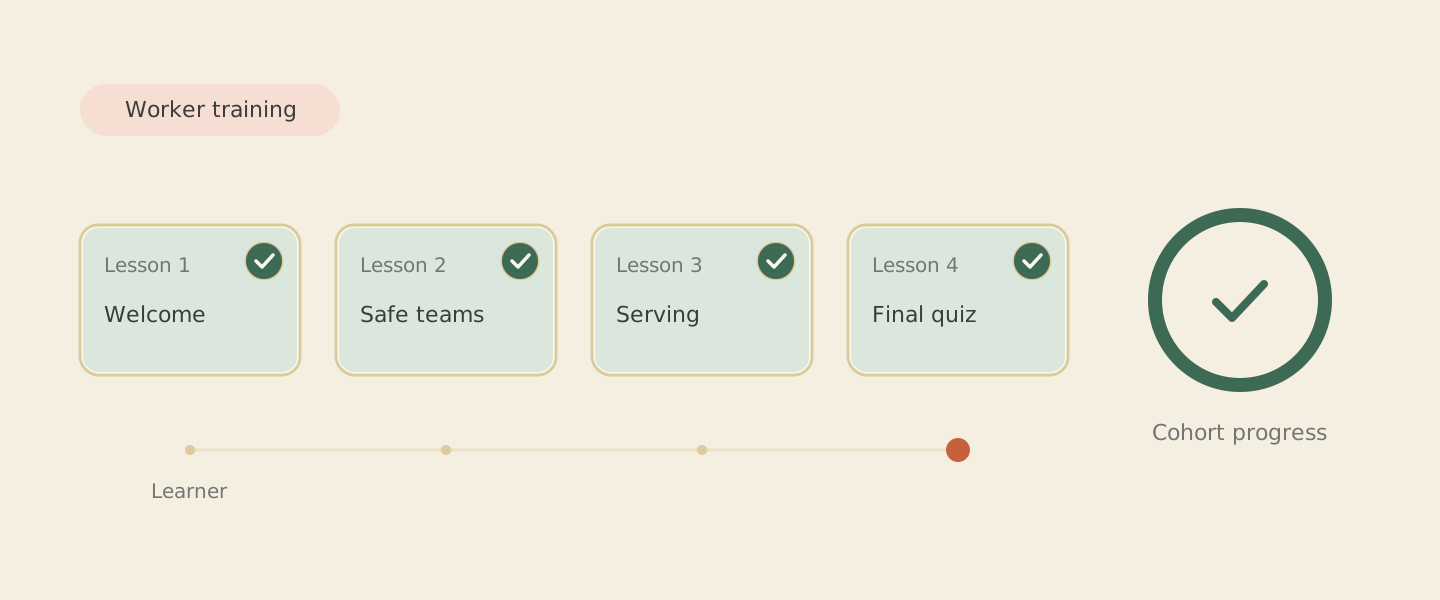 A learner moves through the course while each lesson checks off and the cohort's progress arc fills to complete.
The part that saves your evening is who you enroll. The volunteer team you already keep in Cendance is right there. You add a person by name, a whole group, or a segment, in any mix you like, press Enroll, and the class fills without you retyping a single name. The team you have been shepherding for years becomes a course in about a minute.
And now the Tuesday question has an answer. The course lists everyone with a plain word beside their name: Not started, In progress, or Completed, and a small bar showing the distance covered. Open one person and you can see how far they got, lesson by lesson. When the parent asks, you glance, and you tell them. When a course deserves a real record, you add a certificate, and your workers and leaders and members finish holding something official that says they did the work.
None of this writes the training for you. You still have to know what a new greeter needs to hear. You only have to say it well once, and then it waits. Next fall, when the new class arrives, you make a new cohort and run the same course again. The material is already there, patient, exactly where you left it.
You'll find all of this under Learning in your Cendance dashboard. Build one course this week, gather a cohort around it, and the next time someone asks who finished, you will already know.


